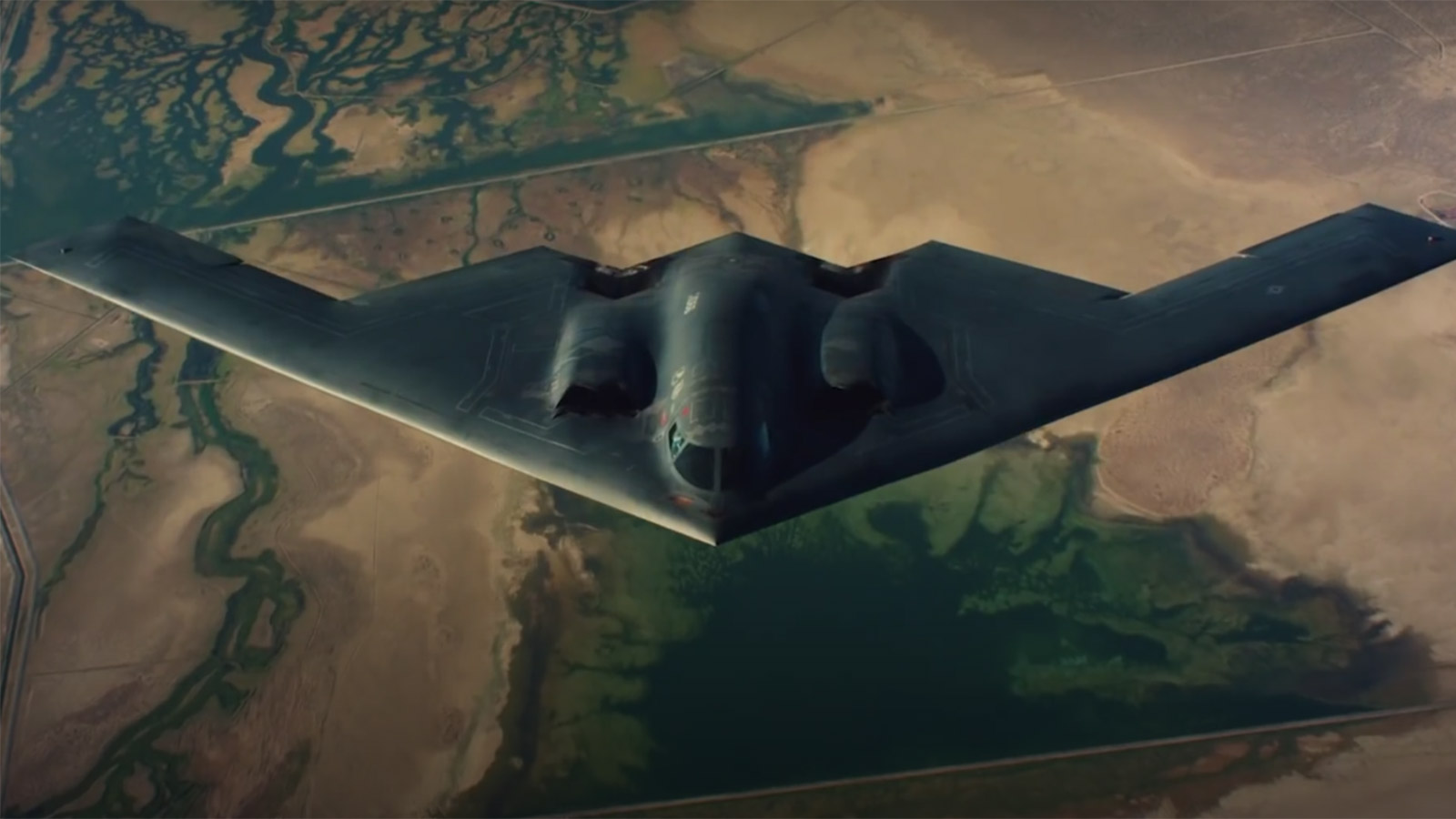
Our President ordered an historic attack on Iran last weekend. It came as a surprise to the whole world. There were no leaks. Our military deployed B2 stealth bombers and fighter jets to Iran. They dropped multiple bunker busting bombs and launched Tomahawk missiles with expert precision on three Iranian nuclear facilities. They flew in, unloaded their munitions, and flew out before Iran knew what hit it. No U.S. casualties. Not a single defensive shot fired. By all counts, it was an awesome display of military might and execution.
In the aftermath, some have questioned whether the President is really antiwar. Others have questioned whether the President had the authority to order these strikes without congressional approval. Still others wonder whether the strikes were worth it.
Our President Is Not A Warmonger
The President is a lot of things, but a warmonger is not one of them. He has opposed military conflicts throughout his public life. He did not deploy interventionist foreign policies during his first term. The President campaigned on promises of ending the Russia/Ukraine war and the Israel/Palestine war. He has not succeeded in ending those wars, but not for lack of trying. The President’s brand of diplomacy at times seems needlessly combative and even misguided. But he presses on, confident in his ability to end the wars.
We heard the interview where the President exclaimed that Israel and Iran “don’t know what the fuck they’re doing.” I tend not to judge F-bombs, lest I be judged. But this particular F-bomb actually caused me to empathize with the President. It struck me as a spontaneous and authentic expression of anger, frustration and bewilderment. The President knows that wars typically end in a treaty or some other diplomatic solution. He has trouble comprehending why these countries don’t skip the bloodshed and jump straight to the deal.
Congress Has A Constitutional Role In The Deployment Of Our Troops
The Administration and its supporters claim that the President has plenary authority over the deployment of our troops. They seem to think Congress does not have a role in overseeing military matters. They are wrong.
Under our Constitution, Congress has the power to declare war. To raise and support armies. To provide and maintain a navy. To provide for the common defense of the United States. And to make rules for the government and regulation of the land and naval forces. The President is the Commander in Chief of the Army and Navy. There is, by design, natural tension between Congress and the President when it comes to military matters. This is what checks and balances are all about. But those who claim the President has plenary authority over the military, to the exclusion of Congress, are wrong.
The President Had Authority To Order Limited Strikes On Iran
On the other side, members of Congress claim the President did not have authority to order strikes on Iran. They claim the President needed to seek congressional approval first. They are also wrong.
In 1973, Congress passed the War Powers Resolution in response to public outcry over the loss of life in Vietnam. Congress passed the Resolution with a bipartisan 2/3 majority, overriding the President’s veto. The Resolution limits the President’s power to commit our troops to armed conflict without congressional approval. The President must report to Congress within 48 hours of sending our troops into battle. He should consult with Congress “in every possible instance” before deploying our troops. The President must withdraw our troops within 60 to 90 days if Congress does not authorize the use of force.
Several Presidents have claimed that the Resolution limits the President’s military authority in an unconstitutional manner. Nevertheless, Presidents have issued over 130 reports to Congress pursuant to the Resolution. Congress has authorized troop deployments multiple times, including Lebanon (1983), the Persian Gulf (1991), Afghanistan (2001) and Iraq (2002). At the same time, most every President since 1973 has deployed troops without first seeking congressional approval. See for example Yugoslavia (1999), Libya (2011), Syria (2017). Each time, we debate the limits of Presidential and Congressional authority in military matters. This is not new. But there is a correct answer. The President has authority, even under the Resolution, to deploy troops for discrete missions without first seeking congressional approval.
All Points Bulletin For The House Speaker’s Spine
I try very hard to maintain my objectivity on this blog. But the House Speaker is testing my patience. Case in point, the House Speaker recently stated that he thinks the War Powers Resolution is unconstitutional. I understand why the President might take this position. The Resolution limits the President’s ability to act unilaterally, as it should. But a member of Congress? Keep in mind that the Resolution is itself an act of Congress passed by a bipartisan super-majority. Congress passed the Resolution to help fulfill its constitutional duty to check the President’s use of military power. The House Speaker wants Congress to abandon this duty and endow the President with unbridled authority over the military. This is reckless and irresponsible. It would increase the threats that our uniformed men and women already face.
No self-respecting Congressperson should ever cede her/his authority to check the President’s use of military power, regardless of party loyalty. No self-respecting Congressperson should ever cede her/his role in our constitutional construct. But I am not here to accuse the House Speaker of self-respect. He abandoned his post and his oath long ago. The House Speaker forgets our history (think Vietnam and Afghanistan) and will doom us to repeat it. He no longer demonstrates the ability to think for himself or to speak truth to power. The House Speaker has allowed and even enabled the President to neuter Congress at every turn. He is the President’s lapdog. A useful idiot whom the President will euthanize (figuratively speaking) when his usefulness expires.
The Political Hackery Continues
Back to Iran. In the days since the strikes, debates have raged about the extent of damage done to Iran’s nuclear facilities. The Administration initially claimed the strikes “totally obliterated” the three nuclear facilities. Someone (illegally) leaked a preliminary assessment suggesting the strikes set back Iran’s nuclear program by only a few months. This caused quite a stir. Preliminary reports from Israel and the International Atomic Energy Agency suggest more extensive damage. Members of Congress can’t agree about the damage assessment – and they received the exact same briefings.
We should not rely on what politicians tell us about the damage assessment. They continue to reveal themselves as political opportunists first, honest brokers almost never. They so focus on discrediting their opponents that they forget about their own credibility, or lack thereof. The Defense Department has experts in assessing battle damage. Those experts need several weeks to make a final assessment. We should listen to those experts, not politicians. I expect the damage assessment will be something more than a few month setback and something less than total obliteration. Time will tell.
ABC – Always Be Closing
In the meantime, the strikes were severe enough and impactful enough to get Iran’s attention. Within 24-hours of the strikes, Iran and Israel entered a cease fire, albeit a fragile one. We should not understate the significance of this development. Iran is the world’s leading sponsor of terror. Yet even as Iran’s parliament chants “death to America,” these strikes put Iran in a highly vulnerable position. And Iran’s leaders know it. This is a unique moment in history. The President has a singular opportunity to extract meaningful and enforceable concessions from Iran. He can effect lasting change to Iran’s nuclear program and to its sponsorship of terror. The President deserves credit for creating this moment. Now the deal maker-in-chief needs to close the deal and avoid further military involvement.