My Ancestors Fled War Torn Ireland
My grandmother on my mother’s side came from County Cork, Ireland. As a young girl, her father, my great grandfather, brought her by ship across the Atlantic Ocean to the USA. It was a tumultuous time in Ireland. Irish Catholics had lived under oppressive British rule for generations. The Irish fought their War of Independence against the British in 1919-1921. Irish Catholics and Irish Protestants fought a Civil War in 1922-1923. This led to partitioning between the Republic of Ireland, which is independent, and Northern Ireland, which is part of Great Britain. Many Irish emigrated to the USA during this time.
The USA did not accept the Irish with open arms. The Irish faced discrimination, religious persecution, and harmful stereotypes here in the States. Still, coming to the USA had more appeal than remaining in war torn Ireland. My great grandfather took my grandmother back and forth between Ireland and the USA multiple times. Each time, he brought more family with him. My grandmother had multiple scars on her shoulder from being inoculated each time she entered the country.
My grandmother passed away when I was just eight years old. I never had a chance to ask about her life in Ireland or her life as an immigrant. I would have liked to hear Grandma tell her story. Still, sometimes, when I take a deep breath, I feel her Irish immigrant spirit well up inside me. I carry a tremendous sense of responsibility to those who came before me. Those who sacrificed for future generations. I stand on their shoulders. How different my life would have turned out if my great grandfather had made different choices. I honor his sacrifices with hard work and devotion to my family, which is his family.
Some Fled The Collapse Of Economic And Social Orders
I have a friend who grew up in the Soviet Union. He hailed from what is now known as Azerbaijan. He was in Moscow when the Soviet Union fell. Violent conflicts erupted in Azerbaijan. Russian officials told him he could not stay in Moscow. But he could not return to Azerbaijan either due to the violence. He eventually found his way to the USA. He was just a teenager.
Once in the States, my friend drove a taxi for a while to make ends meet. He eventually got a steady job and went about the hard work of creating a new life. Today he owns and runs a multi-million-dollar manufacturing company. He employs hundreds of workers. He made something out of nothing. An astute businessman with a keen intellect, he is also kind, compassionate and generous. A devoted husband and father who created better circumstances for his children and their children. A self-made man in the truest sense.
Some Fled Genocide
I have another friend who was born in Cambodia in the 1970s. Cambodia had its civil war in the early 1970s. The ruthless Khmer Rouge regime led by Pol Pot assumed control of Cambodia at the end of the civil war. Between 1975-1979, the Khmer Rouge arrested, executed and buried more than 1.3 million Cambodians. It was genocide. There were mass graves in various locations around Cambodia. These became known as the “killing fields.”
My friend was an infant at the time. Khmer Rouge murdered her father. Her mother embarked on a harrowing trek through the jungles of Cambodia. She carried her infant daughter and had two other small children in tow. If the Khmer Rouge had captured them, they surely would have been executed. Miraculously, they made it out and eventually found their way to the USA. Today, that infant is a grown woman who owns a successful business and has a wonderful family.
Let’s Not Forget Where We Came From
Many of us have stories like these, though we sometimes lose touch with them. The vast majority of people who emigrate to this country come looking for a better life. An opportunity. The American dream. Many flee unimaginable circumstances. Poverty. Starvation. Persecution. Oppression. Torture. Gang violence. Civil war. Genocide. As with my great grandfather, they emigrate to the USA as a matter of survival.
These origin stories are uniquely American. We should celebrate them. No other country on earth has such a rich tradition of people overcoming long odds and beginning anew. For those of us lucky enough to know our origin stories, we should jealously guard them. Cherish them. Study them. Learn from them. Pass them on. They help explain who we are and where we came from. They give us a sense of pride, belonging and resilience.
Images Of Violence Used To Turn Our Stomachs
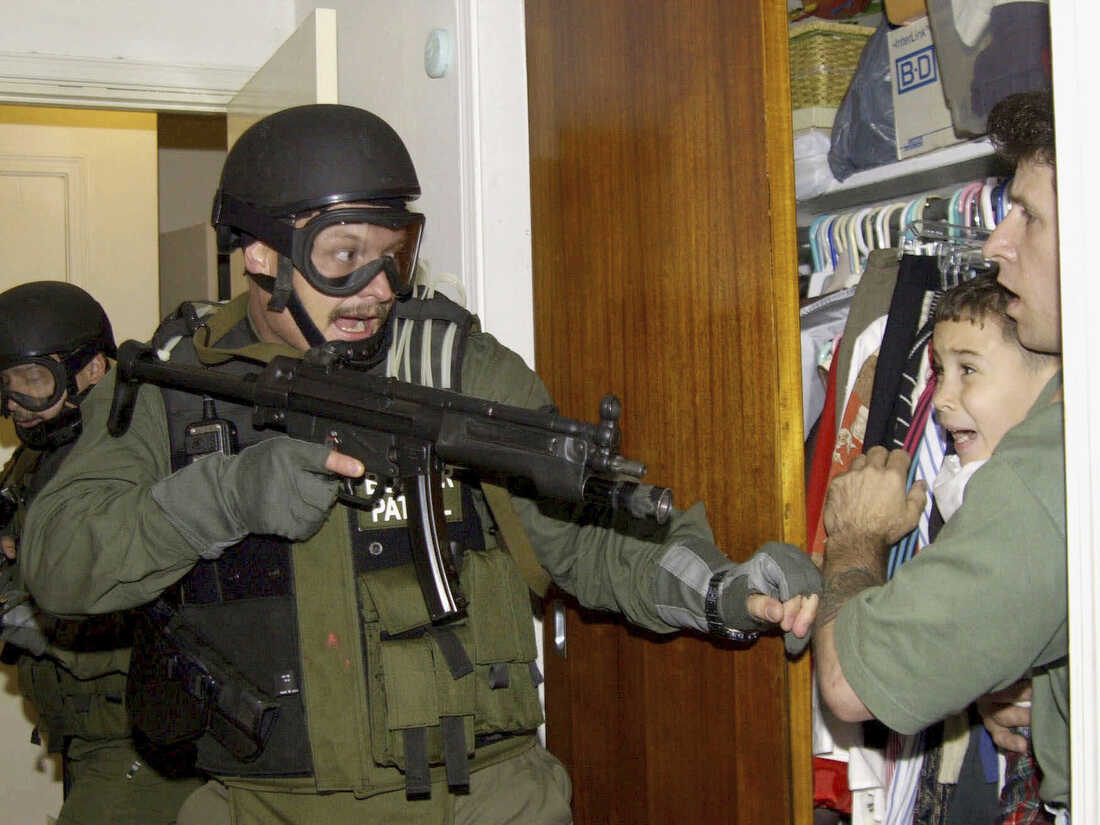
In November 1999, Elian Gonzalez’ mother took him on a boat in Cuba bound for Florida. The boat sank. All but three people on the boat drowned. Elian’s mother drowned. Elian survived. Two fishermen found Elian floating on an inner tube in the middle of the ocean and rescued him. Elian was six years old.
An international custody battle ensued. The US granted Elian temporary status to remain in the country. Elian’s uncle, who lived in Florida, wanted Elian to remain in the States. Elian’s father wanted him returned to Cuba. The courts eventually ruled that Elian should return to his father in Cuba. The INS then raided the uncle’s home to recover Elian. The picture above captures the moment INS found Elian. INS agents wore combat gear. They were armed to the teeth with weapons drawn. Elian’s uncle held him. Elian cried in horror.
The incident gained international attention. The picture won a Pulitzer Prize. The public cried foul. The situation did not require an armed confrontation. The uncle had availed himself of the legal system. He was not a rogue actor. Elian had suffered enough trauma. We did not need to inflict further trauma on the boy.
We Should Not Normalize Violence On Our Streets
In the 26 years since Elian Gonzalez incident, we seem to have grown immune to scenes of violence like this. We see similar pictures and videos today. It doesn’t turn our stomachs anymore. Today, INS agents enter peaceful communities wearing masks and armed with all manner of weaponry. Seemingly compliant targets get wrestled to the ground and zip-tied. Many then get deported to prisons in countries known for torture and human rights abuse. It all seems barbaric at times. Have we not evolved beyond this?
I understand that some illegal immigrants are violent criminals. We should offer no quarter to violent criminals. I also understand that INS agents can find themselves in dangerous situations. They should protect themselves, and we should respect their service. But the vast majority of illegal immigrants, including many being hunted and deported right now, are not violent criminals. They are not rapists or murderers or gang members. They are poor people fleeing bad circumstances and looking for a better life. What happened to our compassion?
And I also understand that we need to strengthen and enforce our immigration laws. We should expect immigrants to come here legally. If they come here illegally, INS can and should deport them. But these people deserve some basic human decency and dignity in the process. They are not animals, and we are not savages. Have we forgotten our origin stories?
And let’s not fool ourselves into believing that this violent behavior only extends to illegal immigrants. The violence is happening in our neighborhoods in front of our children. Even as I write this, the Administration is working to redefine birthright citizenship. It is considering how to de-naturalize some of our friends and neighbors. The Administration is not stopping with illegal immigrants. What will we do when they come for us?
Comments
One response to “Immigration Policy At The Business End Of A Gun”
“For those of us lucky enough to know our origin stories, we should jealously guard them. Cherish them. Study them. Learn from them. Pass them on. They help explain who we are and where we came from. They give us a sense of pride, belonging and resilience.”
Question: What will we do when they come for us?
Answer: For myself, they better come with an account of my origin and a history of my family extending back beyond this country.
But for now, I will fight for compassionate, decency, and dignity in our work with immigrants. Personally, it is my job as an American who comes from oppression- to stand firm against poverty, starvation genocide and torture.
And thanks for sharing these origin stories. On July 4th, I celebrate them all.